Posted in New thinking

The Mountain and the Valley

Ernest Buckler died in Bridgetown, in 1984. (He was born in West Dalhousie, 1908).
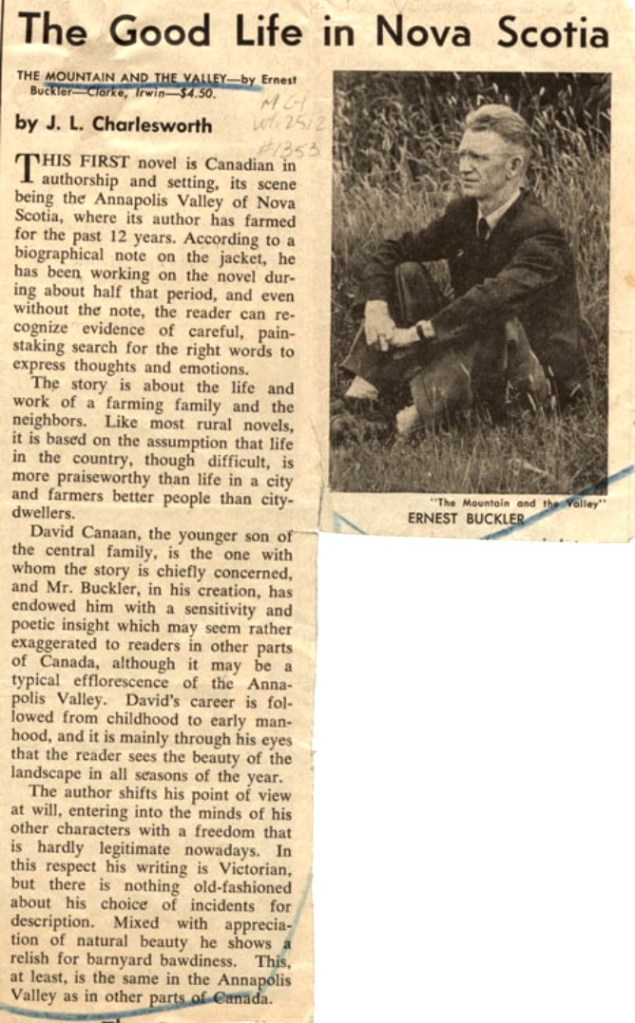
from the Nova Scotia archives.

From the back cover of “The Mountain and the Valley“,
set against the backdrop of the Annapolis Valley’s natural beauty, The Mountain and the Valley captures a young man’s spiritual awakening and the growth of artistic vision.” Published in 1952.

Today, in 2022, Annapolis County is attempting to develop a municipal plan. Indeed, the County includes four distinct regions: South Mountain, the Valley, North Mountain and the Bay of Fundy shore. Each region depends on a different mix of resources: forestry, agriculture, fishing and mining.

Within the County, we have separate municipal units: Annapolis Royal and Middleton as well as a number of smaller villages. To plan the future of the County, requires representation from the four landscape units, the different resource sectors, the various municipal units, and the business community, as a whole.

We need a consortium of citizens who can agree on a planning methodology, the mechanism for understanding our geography, e.g. land use, population distribution, river networks, road networks, climate conditions, housing stock, etc.

Without an agreed methodology, plus access to common geographic information, it will be impossible to reach a consensus on a common future.

These discussions cannot be left to County employees or an external consulting company. Instead, we need a citizen consortium, with representative voices from the different geographies, sectors, and communities.

With a common geographic database, we can at least share our understanding of the County, its resources and hence possible future.

Let us follow in Ernest Buckler’s footsteps and in his artistic vision.

Acknowledgements

I have benefited from conversations with my new neighbour, Rob Jarvis, with Jane Nicholson, with John Wightman, with Brian Reid. Edward added the graphics. Heather shared the gardening.

Reference

Ernest Buckler, 1952, The Mountain and the Valley, McClelland and Stewart Inc.
(link to 2010 edition HERE)

Posted in Event Review

Lawrencetown Event

Last night, I attended the Plannapolis meeting at the Lawrencetown Fire Hall, hosted by Annapolis County and by Stantec.

Attendance was excellent, with over seventy community members. This was my second meeting, as I also attended the one in Centrelea.

What did I learn?
What questions remain?

The format was similar between Centrelea and Lawrencetown. The only difference was the attendance of Stantec Senior Planner, John Heseltine.

My impression was that the municipal planners would be responsible for the six coloured areas on the map and Stantec would look after the rest of the county. Coloured areas include Cornwallis, Habitation, Upper Clements Park, East End, Bridgetown and Water Supply areas. Also on the map was a large area of South Mountain designated as a ’wind resource’.

Future Use Land Use Map (web LINK)

It was a lively session, with many perspectives from the agricultural community. At one level, it is positive that the province has determined there is a need for a review of municipal planning. On another level, it does beg the question, what has happened over the last twenty-plus years.

A long time ago, there were identifiable planning staff. There was a vibrant planning program at COGS. Certainly, I can recall Nick Lasch, Phil Hore, Mike Donnelly and, more recently, Ed Symons.

Fundamental to the planning process is understanding and mapping the land use. This includes agriculture, forestry and other resources. There was a time when GIS technology was used to provide this baseline information. Is that still the case today?

In Annapolis County, what is the separation between lands managed by the province, (e.g. crown lands) and those managed by the county? Within the county, why is Bridgetown a separate entity, but not Middleton, Annapolis Royal etc? I think the answer, was that Bridgetown found itself in financial difficulty. Should that impact the planning process?

Is the situation in Annapolis County similar or different from Kings County or Queens County? Are there province-wide standards for planning? If you do not know the resource, where and how much, how can you plan?

There should be sufficient residual resources at COGS/AGRG to develop a current county-wide map of land uses. Or does that infringe on the rights of citizens and communities? or COGS?

The citizens have shown initiative and direction with MapAnnapolis, perhaps a somewhat similar approach could be applied to Plannapolis.

Acknowledgements

These are the personal view of a long time, Annapolis County resident, on and off, since 1980. They have been influenced by students and colleagues at both COGS and AGRG. Edward added the graphics. For more details on the current process, check the Plannapolis website.

Postscript

I wonder whether the reaction to ’resource planning’ is a characteristic of rural Nova Scotia. Edward tells me that Beavercreek Winery has been sold, presumably, with the Tavern too. Hope new owners will maintain their investment.

I share with you the large Horse Chestnut tree across the road.

Posted in Book Review

Bridgetown Weekend

It has been a hot weekend in the Annapolis Valley. On Saturday, we took a break from gardening and went to Aroma Mocha, in Bridgetown, for a morning coffee.

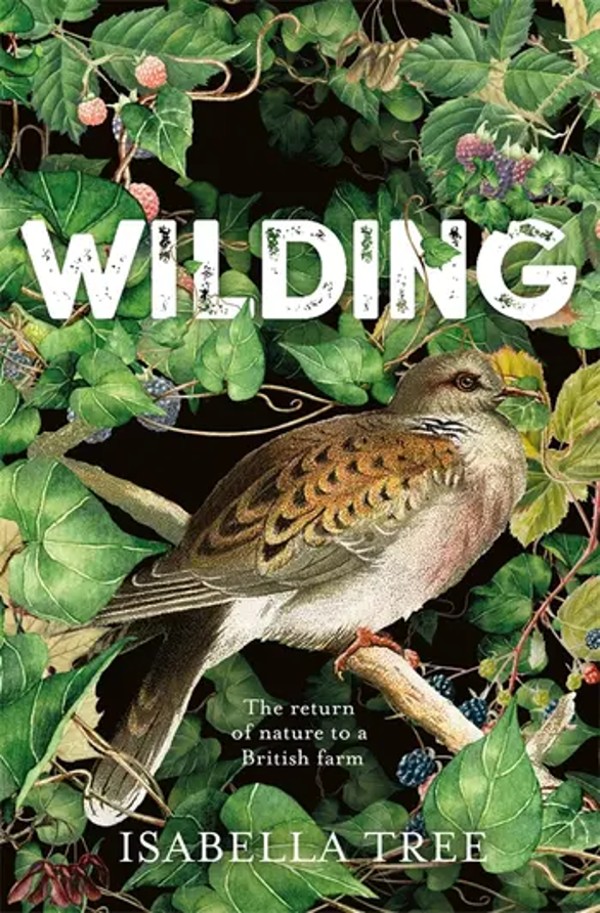
Had to stop at the Endless Shores bookstore. Heather found Isabella Tree’s ‘Wilding’. It describes a ’rewilding’ project in West Sussex. This challenges farming practices in the UK, and raises the question about agricultural practices in the Valley.

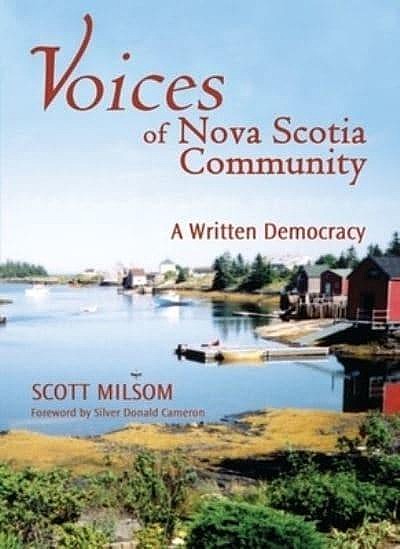
I found Scott Milsom’s “Voices of Nova Scotia Community: A Written Democracy“. After a Foreword by Silver Donald Cameron, it describes Milsom’s work with the Coastal Communities network. I have started on the Evangeline Trail, travelling from Yarmouth up towards Canning. Given the suite of public meetings on County Planning, it offers useful insights.

From the Internet, I received a notice that they have published posthumously Barry Lopez’s last book “Embrace Fearlessly the Burning World“.


On Sunday night, we went to the Tragedy Ann & Basset concert at the Dawn Oman gallery. This was a beautiful surprise, within the restored church, surrounded by Northern artwork, we listen to folk songs by a young duo from Southern Ontario. In the intermission, we picked up their latest CD, Heirlooms.

After dark, we returned home to a chorus of tree frogs from the vernal pools in the forest. Earlier, in the afternoon, we had been serenaded by a sapsucker, beating out a tune on the wooden pergola. Above, in the birch trees, hummingbirds take a rest; the azaleas are in flower and attract both the hummingbirds and the bumblebees.

One last book review.

In the Inside Story, Heather found “Alone on the Trail“; a new book by a young Newfoundland author. We are savouring this one. It is a novel, describing a trip by a small group along the Long Range Mountain trail in Gros Morne National Park. Heather and I used to run back-packing trips through that geography in the early 1970s. What a coincidence!

Postscript

We stopped at Button Brook farm on Hwy #201, outside of Bridgetown, at their farmer’s stand. One can buy fresh vegetables, as well as seedlings for the garden. They opened this weekend.

Acknowledgements

To Dawn Oman and Scott for bringing Tragedy Ann to their exquisite venue. Sadly, in times of COVID, it was a small audience. Heather shared the experience and time away from the garden. Edward added the graphics.

References

Isabella Tree, 2018, Wilding: The return of nature to a British farm, Picador.

Scott Milsom, 2003, Voices of Nova Scotia Community: A Written Democracy, Fernwood Publishing.

Barry Lopez, 2022, Embrace Fearlessly the Burning World, PenguinRandomHouse

Emily Hepditch, 2021, Alone on the Trail, Flanker Press.

Tragedy Ann, 2022, CD Heirlooms, tradegyannmusic.com

Posted in Event Review

Guided Walk

Yesterday (Wednesday) Heather and I conducted a guided walk through Andrew’s old property from the Hunter organic orchard on Highway #201, to the Annapolis River (see “Times Have Changed” blog post).

The last time we conducted a similar hike was in 1975 in Gros Morne National Park for Black Feather outfitters in Ottawa. On that occasion, it was a ten-day event, including hiking along the Long Range Mountain trail.

This time, it was a three-hour hike for two couples from Ottawa, and a father from Mount Rose (North Mountain). Our objective was to demonstrate the changing ecology from South Mountain to the Annapolis River, as well as the changes in land use over the last twenty years. The land has been used by the Mi’kmaki for a much longer period.

The experience allowed small group interaction. The couples had spent time overseas enjoying other landscapes and cultures.

Heather and I recognized that under COVID conditions we had missed the stimulation of interacting with other age groups and interests. We thank Celes for the initiative, and Abby and her group for their insights and interests.


Today, I attended the Plannapolis consultation at Centrelea. What I found most striking, was the lack of any appreciation of the unique economic opportunity presented by the technology and education at COGS (NSCC’s Centre for Geographic Sciences). I fail to understand why today, GIS technology is not a standard for community meetings. This allows a common understanding of our geography, land use, people and culture.

Second, Abby and her partner met at COGS. Imagine how many young professionals we have graduated from Lawrencetown since 1980 (The year when I started teaching there). It seems obvious to me that this represents both an educational and an economic opportunity — and opportunities lost if not exploited.

Acknowledgements

Heather shared her knowledge and ‘sense of place’ on the guided walk. Rob and Sinead gave us permission to conduct the walk on their property. Pierre at Ironworks for the excellent Hunter Brandy. Edward added the graphics. Celes Davar at Earth Rhythms has brought Experiential Tourism to the Annapolis Valley.

Reference

Annapolis County-wide Plan Review, prepared by Stantec Consulting Ltd., May 9, 2022.

Posted in biographical sketch

Preparing for Experiential Tourism

We have been working with Celes Davar at Earth Rhythms to deliver a two-hour walking tour through the property. Entitled, ’An Adventure in Paradise’.

The orchard is in full bloom with cuckoo flowers and dandelions. Trees are still in bud. Nova Spy is the first to flower.

Preparations include organic apple juice, Ironworks Hunter brandy, and Fox Hill cheese, checking the trail conditions, and what’s in flower. This weekend the ticks, and blackflies seemed unusually virulent.

Today (Monday), we went up to Port William. We wanted to buy local Fox Hill cheese.

In Canning, we stopped at the Coffee Shop. I noted that the Merritt Gibson Memorial Library has a plant and book sale. On the road to Starr’s Point, we enjoyed the vista of vineyards in the region. This contrasts with Annapolis County.

With the approach of the long weekend, I noted the availability of Saltscapes 2022 “Your-on-the-go Guide to Canada’s East Coast”.

This week, Edward forwarded me a link to the Fogo Island Arts Upcoming Digital talks.

I will try to check out the events. Certainly, Nova Scotia (Annapolis Valley) could join the cross current residency between Scotland and Newfoundland. It is part of a Connect and Collaborate program by British Council Scotland, Creative Scotland, with support from Shorefast.

On Andrew’s property, besides managing the organic orchard, we have been supportive of coppicing poles for yurt construction, and charcoal production. All examples of alternative woodland management. We hope that the new owners, Rob and Sinead will continue a different, but alternative approach too.

Acknowledgements

Celes proposed the concept of a guided walk. Rob and Sinead allowed access to the property (previously Andrew’s). Edward forwarded the Fogo Island Arts link. Heather shares the experience.

Posted in biographical sketch

A room of one’s own

Our latest project is the conversion of the garage into a studio/office for Heather.

This will allow her to spread out her botanical specimens and the associated technical literature. The work is being undertaken by Jerry Frigault and Dubrovko. In the words of Virginia Woolf, ’she needs a room of one’s own’.

From England, Andrew Ronay forwarded a link to a set of talks organized by Planted in conjunction with the National Trust. To date, I have had the chance to enjoy two panels moderated by Sam Peters.

  1. Reading Nature.
  2. Farming for all.

In a time, when the County is considering ’how do you want your community to grow?’, it is both educational and stimulating to hear about initiatives in other countries.

My takeaway message from the Planted YouTube videos is that an important component is education.

As a research scientist engaged in education at the post-secondary level in Annapolis County for over forty years, I see engagement at the school level, at the community level and within tertiary institutions as critical to rural planning. I look forward to the slate of community meetings.

From the Annapolis Valley Regional Library, I have received notice of two books by Torbjorn Ekelund.

2020, In Praise of Paths: Walking through Time and Nature.

2021, A Year in the Woods: Twelve small journeys into Nature.

I am working my way slowly through them. At a time when gardening is a preoccupation.

Acknowledgements

Jerry and Dubrovko for their carpentry and electrician skills. Andrew Ronay for the link to Planted-Unearthed and the work of Sam Peters. Heather expressed the need for a room of her own. Edward added the links.

Reference

Virginia Woolf, 1929, A Room of one’s own.

Posted in Opinion

Rural Education

This week’s Annapolis Valley Register included two articles on education.

Anne Crossman’s column focused on the buildings. Whereas the lead article, Generational Duty, emphasized the work of Avery Jackson and the Clarence Community Club, restoring the United Baptist Church and the Clarence East school.

What attracted my attention was that Avery plans to start his Acadia University M.Sc in Geographic Sciences in September 2022. The first year is at COGS, and the second at Acadia. This took me back to 2009 when I co-authored a paper with Ian Spooner, Defining the Applied Geomatics Research agenda: joint graduate degree collaboration between the Nova Scotia Community College and Acadia University, Geomatica 2009 (63) p.156-161.

Here we are thirteen years later, and a local student recognizes the opportunity from this collaboration.

How many students have followed this path?

It builds on the one-year technology diploma at COGS and allows the graduate to apply their technical skills to a significant problem at Acadia University in the second year.

This is not dissimilar to the original one-year diploma at COGS in the 1980s. In that case, it was a three-semester program, culminating in a cooperative project.

Avery’s example shows that post-secondary education is available in a rural setting. If we are to change the relationship between rural and urban Canada, we need more examples where students can learn and apply their skills in a rural context. This was well understood by Major Church and JB Hall. It does require a willingness for collaboration between the community college and the universities.

Many of today’s global issues occur in a rural setting, whether agriculture, forestry, fisheries or planning, within the context of climate change, changing demographics, transportation, and new employment models.

A simple first step would be to provide a list of graduates from this institutional collaboration. What type of projects did they complete for their thesis? Where are they now?

Clearly, the Register article on Avery Jackson illustrates the recognized potential for these graduates in rural Nova Scotia, and beyond.

Acknowledgements

Appreciation to faculty at COGS and Acadia who have kept this option alive. Edward added the graphics. Anne Crossman expressed her interest in our historic infrastructure.

Postscript

From David Colville. After tomorrow’s graduation, I think there will be about 32 students that have completed the MSc Applied Geomatics program.  A few more are somewhere along the completion process.

References

Annapolis Valley Register, Thursday, May 5, 2022 ’Generational Duty’ by Jason Malloy.

Annapolis Valley Register, May 5, 2022, Anne Crossman, Valuing Education: Nova Scotia has deep history with providing training.

R.V. Maher and Ian Spooner, 2009, Defining the Applied Geomatics research agenda: joint graduate degree collaboration between NSCC and Acadia University, Geomatica 63. p.156-161.

Posted in biographical sketch

Handyman

Living in rural Nova Scotia, there are a number of devices that need to be maintained. over and above functioning computer systems.

My current list includes a chainsaw, chipper, splitter, tractor and bush-hog, and Z-track lawnmower.

Fortunately, I have access to folks who are more ’handy’ i.e. practical than myself. Stephane, from across the road came over and chainsawed (with a large blade) the remnants of a downed maple. He also provided much-needed intelligence on the use of a new electric log splitter.

Later, I contact Neil Bent in Lawrencetown. He was able to use the air compressor to inflate the tires on the chipper. He will come back later to replace a couple fence posts that have rotted out this past Winter.

With the sale of Andrew’s farm, we are no longer responsible for the organic orchard or bush-hogging the lower fields with the tractor. The tractor goes with the farm.


On another topic, I try to keep the number of electronic newsletters to a minimum. There are really only two weekly regulars; Emergence Magazine, and The Marginalian by Maria Popover.

Given the quality of TV programming and the dire news, we enjoyed listening to the interview with Sam Lee on the Nightingale’s Song. It was a one hour podcast. I have included the link here (Image from Emergence Magazine).


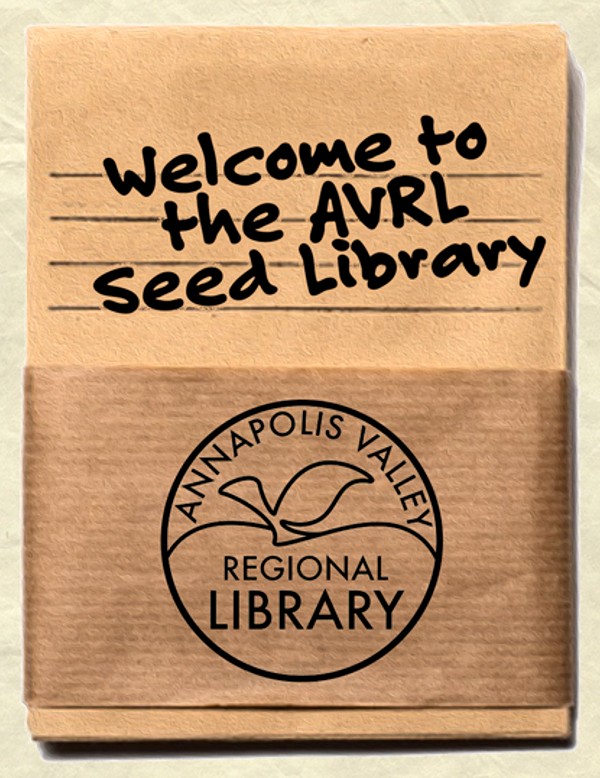
Finally, kudos to the Annapolis Valley Regional Library for their continuation of the Seed Library. This year, it features the Three Sisters Companion pack.

Acknowledgements

Stephane Doucet and Neil Bent for their handyman skills. Jaki Fraser at the Lawrencetown library. Heather enjoyed “Nightingale’s Song”. Edward added the graphics.

References

Emergence Magazine, May 1, 2022.

The Marginalian by Maria Popova, May 1, 2022.

Posted in Event Review

Nisoge’katik

This morning, Heather and I shared a zoom call with Celes Davar, Earth Rhythms.

He operates an experiential tourism business in the Gaspereau Valley of Nova Scotia. Our paths have crossed several times over the last forty years.

In an earlier email, he had forwarded information on the STAR (Strategic Tourism for Areas and Regions) visioning session for a new tourism strategy for the Annapolis valley. This week, there were sessions from Windsor to Annapolis Royal. I chose to attend the event at the Bridgetown Motor Inn. It was hosted by ACOA and the Valley REN.

As you might imagine, the small group of attendees was Bridgetown-centric in their interests. Thus, one of my concerns was a collaboration between the different communities throughout the Annapolis Valley region. As a previous board member of the Valley REN, I had noticed the lack of inclusiveness across the region.

To counter this reality, it is my belief that the overall focus should be on understanding our ecological landscape and the relationship of the different communities to these regional assets.

My second observation is that there is a shortage of staff in the hospitality industry, especially in rural Nova Scotia. To offset this, there should be a concerted effort to engage students and faculty within post-secondary educational institutions. With individuals, like Celes, moving into the region, there is the opportunity to become world leaders in the ’ creative rural economy. There exists an amazing resource of artists, musicians, and storytellers in the region. This links back to opportunities for experiential tourism.

Finally, from Celes, Nisoge’katik is the name for the village of Paradise in Mi’kmaq (check placenames.mapdev.ca). It means ’the lower ground

Postscript

From Wade Davis,

The world in which you were born is just one model of reality. Other cultures are not failed attempts of being you; they are unique manifestations of the human spirit.”

Tonight, we went down to Lunn’s Mill to purchase beer in support of Ukraine.

Acknowledgements

Participants at the STAR session in Bridgetown at the Motor Inn. Celes for a stimulating Zoom call. Heather shared the background research. Edward added the graphics, David and Paulette Whitman for their extensive knowledge of the Lawrencetown history and stories.

Reference

David and Paulette Whitman, 2009, Lawrencetown and the Annapolis Valley: An Old Fashioned, But New Scrapbook, Bailey Chase Books.

Posted in Photo Essay

Lost in the woods

We have a walk that takes us down through the Hunter Farm to the Annapolis River and across to the Lawrencetown tree nursery. The walk begins in the organic apple orchard and ends with a cold beer at Lunn’s Mill brewery. Andrew Maher owned the property from 2008 to 2021. The new owners are Rob Jarvis and Sinead Wills (justbewoodsy.com) (see blog post here).

We start at Hunter’s organic apple orchard.

Living Edge planks were cut by Stephane Doucet using his Alaskan chain-saw rig.

An old condenser was used by Alex Cole, Little Foot Yurts to produce charcoal.

Coppiced red maple for yurt poles.

Site of previous year’s charcoal burner.

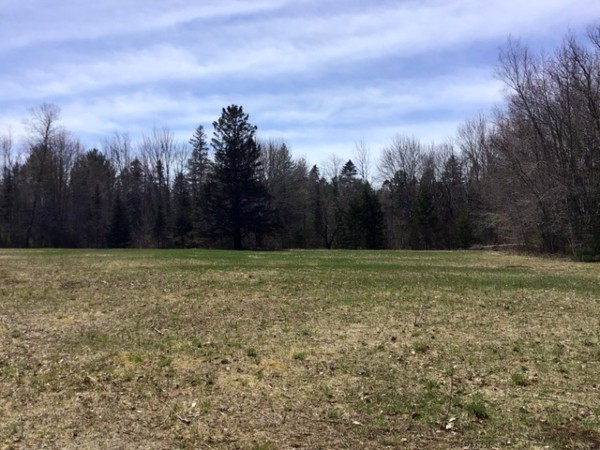
Triangle field.

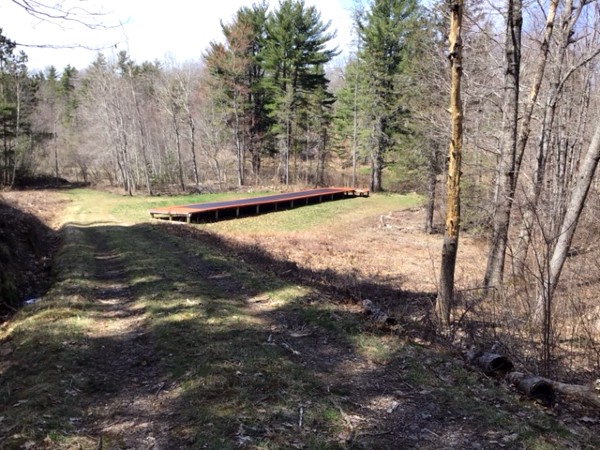
A platform for drying hoses by Lawrencetown Fire Department.

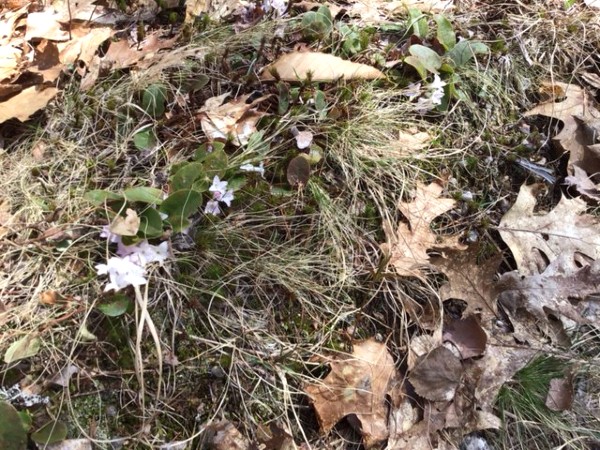
May flowers in bloom.

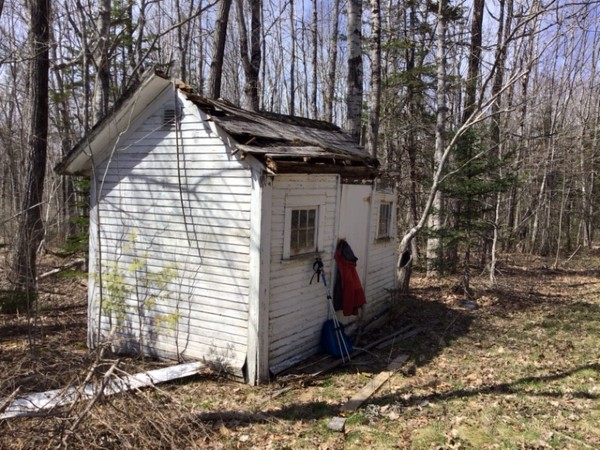
A derelict nursery shed.

A plantation of pine for seed cones.

New plantation of spruce.

We end our walk at Lunn’s Mill Brewery.

Acknowledgements

To everyone who has left their mark on the local landscape: individuals, organizations and government. Heather is my walking partner. Edward is a creative force.

Postscript.

Last night, we watched The Power of the Dog on Netflix.