Posted in Article Review, Book Review

Two magazines and a book

One of the additional pleasures of visiting my father-in-law in New Glasgow is the opportunity to catch up on the current magazines. This time, it included Canadian Geographic and Saltscapes.

In the latest issue of Canadian Geographic, Michael Palin talks about his new book, Erebus.

” I already knew a lot about Canada, as it was a country beloved by British Geography masters, being friendly and coloured pink, and because all maps were on a Mercator’s projection, it looked absolutely colossal.” p.69.

This reminded me of my Geography teacher at Chiswick Grammar School in England. Howard (Hank) Williams would draw maps of the world on the blackboard with coloured chalk. Our task was to identify all the numbered cities and rivers on the map. It seemed that we had these tests every couple of weeks (1958-61).

saltscapesCover_AugSep2018In the latest issue of Saltscapes, two articles caught my attention. Jodi DeLong reviewed  Sandra Phinney’s book ‘Waking up in my own backyard. Explorations in Southwest Nova Scotia. Or as DeLong titled her article ‘ Celebrating our own spaces’

The second article was by Suzanne Robicheau describing an alternative approach to rural economic development, where a group of Annapolis Royal artists put their faith in a brick and mortar marketplace. She describes how “after reading the Ivany report, Jane Nicholson cashed a bond and invested in her community by establishing a private economic development firm called Annapolis Investments in Rural Opportunity (AIRO)”.

Both local, good news stories.

When we drive from the Annapolis Valley to New Glasgow, we often prefer to take the back roads, rather than the 100 series highways. This weekend, we detoured through River John to revisit Sheree Fitch at the Mabel Marple Bookstore. It has one of the best collections of Atlantic Canada books, aside from the wonderful collection of children’s books.
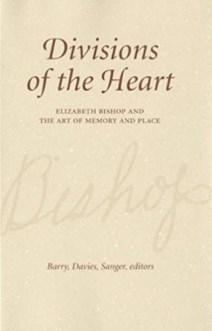
divisionsOfTheHeart_CoverThere, I discovered:
Divisions of the Heart: Elizabeth Bishop and the Art of Memory and Place. Edited by Sandra Barry, Gwendolyn Davies and Peter Sanger.  The book is a collection of twenty-five essays presented at a conference at Acadia University in 1998, as well as forty photographs relating to Bishop’s life.

One essay that caught my attention was by Brian Robinson. He is described  as ‘a Geographer interested in the relationship between Geography and Literature’ p.314

Robinson, in his essay, references a couple of other Geographers which took me back to my graduate residency at the University of Western Ontario (1969-1972).

David Harvey. Between Space and Time: reflections on the Geographical Imagination. AAAG (1990) p. 418-434. and

John Pickles. Phenomenology: Science and Geography, Spatiality and the Human Sciences. Cambridge University Press. 1985.

It is going to take me a while to read all twenty-five essays in the book plus conduct research into the relationship between Geography and Literature.

I wish to acknowledge the graphic contribution of Edward Wedler, and my travel companion, Heather Stewart.

References

Michael Palin. Life of Erebus. Canadian Geographic. p68-71. September/October 2018.

Jodi DeLong. Celebrating our own spaces.  Saltscapes. p.35 August/September 2018

Suzanne Robicheau. Reinventing the shopping mall. Saltscapes. p.92-94. August/September 2018.

Barry, Davies, Sanger (eds) 2001. Divisions of the Heart: Elizabeth Bishop and the Art of Memory and Place. Gaspereau Press.
Posted in Opinion

A Question of Scale

In the blog Follow the Thread (August 10th) I talked about Scale. Since that time, the last two blogs have looked at the writing of Roy on the global scale (Capitalism: a Ghost Story) and the writing of Bishop on the local scale (her memories of Great Village).

Last week in conversation with Celes Davar, we talked about trends in the tourism industry. This included the concepts of experiential and sustainable tourism, as well the traditional measures of a success — the number of visitors, overnight stays, expenditures, etc.

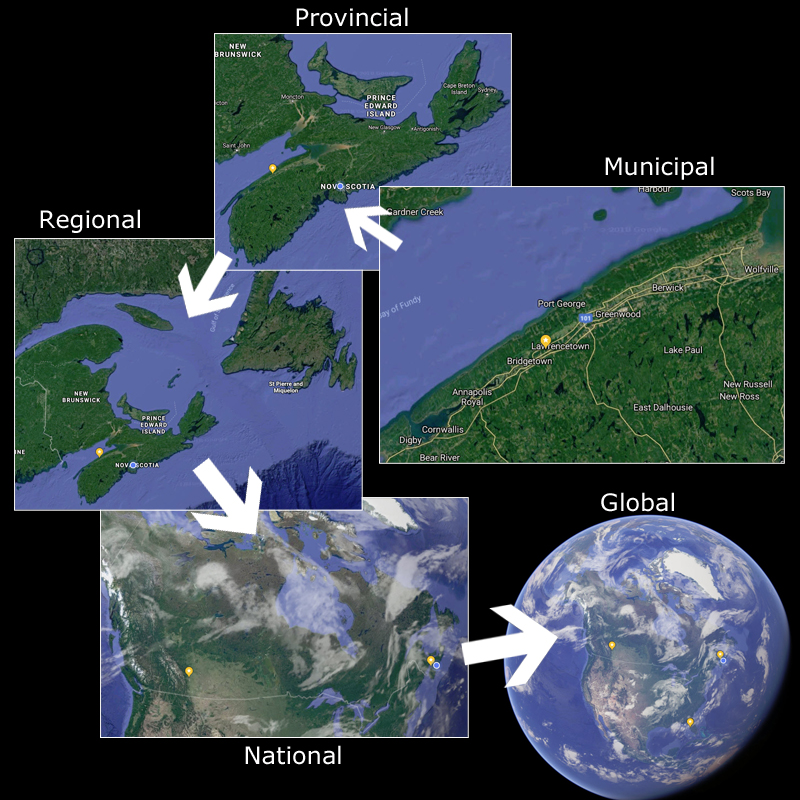
scaleStepping back, I recognized that, consciously or not, we are thinking at multiple scales. Within a geographic framework, this can mean:
Rural Nova Scotia (Annapolis Valley) Municipal government
Urban Nova Scotia (Halifax) Provincial government
Maritimes (regional view). In comparison to Ontario, BC
Canada (national view) In comparison to the US, Europe, Asia
Global. International agencies

If we are looking at tourism in the Annapolis Valley, what is the influence of provincial and national strategies for attracting tourists from other countries e.g. China, Europe? The same would be true in terms of immigration policies.

A related question is the flow of information. Is it a two-way flow? Are the views of the citizens reflected at the municipal scale? Do municipal tourism concerns appear on the provincial agenda? If climate change is a global concern, how is it reflected as you move down the geographic scale to rural Nova Scotia? Do contradictions arise, as you move across the different scale?

When considering the writing of Elizabeth Bishop or Ernest Buckler, it is appealing to think in terms of local geography. However, it is important to appreciate that Bishop spent much of her life in Brazil, the United States and Europe. Buckler went away from Nova Scotia before returning to write about the Mountain and the Valley.

Given access to social media, is it easier today to operate simultaneously at several levels of scale? Certainly, it is easier to network with colleagues and relatives across continents and oceans in semi-real time. Thus comparisons are more readily available. If that is, indeed, the case, what is being lost? What is being gained?

Is it possible to pay attention to detail at multiple scales simultaneously? Or do we need to focus on the local; a particular place and geography?

A corollary is that, as the result of lifetime mobility, the voice of the rural citizen can be informed by experiences from many parts of the world or at different scales. This information flow can be maintained, even though the individual chooses to live in a rural landscape, close to the soil and nature.

Thanks to the  conversation with Celes Davar, email from Sandra Barry, and the graphics of Edward Wedler.

References

Celes Davar.  Check website www.earthrhythms.ca

Recent blogs

Geography III: place, writing and maps. Posted August 23rd

Community Engagement: a Ghost Story. Posted August 15th

Follow the Thread.  Posted August 10th


Posted in Creative writing, Poetry

Geography III: place, writing and maps

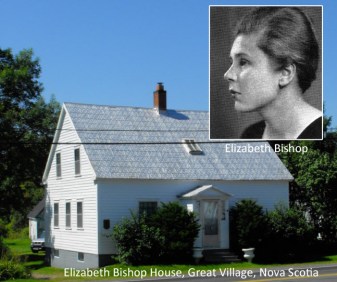
elizabethBishopAndHouseAt the end of last week, we decided to take a trip along the Parrsboro shore, primarily to check out the Fundy Geological Museum. On our way home, we stopped at Great Village, Nova Scotia. This community was of interest; it was the childhood home of the late poet, Elizabeth Bishop. On Friday afternoon, there was a poetry reading at St James Church; there was a self-guided tour of the village available; and one could see the Elizabeth Bishop House, now an artist’s retreat.

elizabethBishopinParisAt the church, I picked up a copy of the brochure Elizabeth Bishop’s Paris. This small brochure describes two visits to Paris in the mid-1930’s. Interestingly, it includes a map of central Paris, identifying locations visited by Bishop and Louise Crane. The map also shows the location of the first conference on Elizabeth Bishop in France. Elizabeth Bishop in Paris: Spaces of Translation and Translations of Space. 6-8 June 2018. The text was written by Jonathan Ellis, Sheffield University.
A second publication, that I purchased, was Echoes of Elizabeth Bishop. To celebrate the Elizabeth Bishop Centenary (2011), the Elizabeth Bishop Society of Nova Scotia (EBSNS) hosted a one-time short prose competition, asking participants to write about their own sense of place. There were five categories: Elementary (Grade 4-6), Junior High (Grade 7-9), Senior High (Grade 10-12), Post-secondary, Open (19 years or older). EBSNS published the winning entries, edited by Sandra Barry and Laurie Gunn. The book was typeset and printed by Gaspereau Press.

EBSNS maintains a website and published an annual newsletter. On the website, under the Media tab, there is a podcast of Claire Miller reading In the Village.

Geography III was Bishop’s final book of poems, published in 1976. On his website, Michael Ollinger, Digging into the earth’s surface: pondering Geography III by Elizabeth Bishop states:

“To describe the planet aptly is one thing, but to understand one’s place is another one altogether. The poems of Elizabeth Bishop’s Geography III go beyond mere description of the earth’s surface and delve into how geography defines not only where we are on the planet, but also who we are”.

” The phenomena of contextualizing  oneself in the world points to why Elizabeth Bishop may have chosen to title the collection Geography III as opposed to Geography I or Geography II; the geographies presented in the poems are more than just a description of the earth’s surface”

In my blog title, I have reinterpreted Geography III as “place, writing and maps“.

I hope you enjoy these links to the work of Elizabeth Bishop and appreciate the remarkable efforts of the EBSNS to connect her work to Great Village, Nova Scotia.

Thanks to Edward Wedler for the graphics, and Heather Stewart, my travel companion.

Postscript. The EBSNS is an excellent model for EBLES (Ernest Buckler Literary Event Society), of which, I am a Board member.

References

Elizabeth Bishop Society of Nova Scotia (EBSNS) http://elizabethbishopns.org

Elizabeth Bishop. 1976. Geography III. Farrah, Straus and Giroux, New York.

Elizabeth Bishop’s Paris. 2018. Brochure. Text by Jonathan Ellis, Sheffield University. j.s.ellis@sheffield.ac.uk

Sandra Barry and Laurie Gunn (eds.) 2013. Echoes of Elizabeth Bishop. Elizabeth Bishop Centenary (2011) Writing Competition. Published by EBSNS, Great Village, NS.

Michael Ollinger  Digging into the earth’s surface: pondering Geography III by Elizabeth Bishop. Posted March25, 2009. Check the Poetry tab at michaelollinger.org


Posted in Book Review, Opinion

Community Engagement: a ghost story

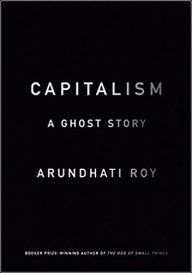
bookCover_capitalAGhostStoryThis blog was inspired by Arundhati Roy’s book Capitalism. A Ghost Story. It is a collection of short stories about life in India. Indeed, it is a VERY scary book [Youtube interview with Arundhati Roy], especially if we look South of the border, to the United States.

In a nation of 1.2 billion, India’s one hundred richest people own assets equivalent to one-fourth of the GDP‘. p.7

At the opposite end of the demographic spectrum, we have rural Nova Scotia. I have identified a few of the concerns that have crossed my desk in the last week or two.

The Municipality of Annapolis County is seeking a solution to the demand for high-speed Internet. Meanwhile, i-Valley is evaluating different alternatives.

The provincial Department of Natural Resources has responsibility for forest practices across the province. A recent hike along North Mountain, above Bridgetown, illustrated the challenges faced by both humans and wildlife, in traversing the trash left by clearcutting. We still await the Lahey report; an independent review of forest practices in Nova Scotia.

econous2018On the economic development front, The Centre for Local Prosperity is promoting EconoUS 2018 in its latest newsletter, as ‘an economy that works for all‘.

We are beset by water quality issues, related to our geology, giving us high levels of arsenic and uranium, especially on South Mountain.

Today, the Municipality of Annapolis County is threatening to withdraw from Valley Waste Resources. Thus we may lose our garbage delivery. This information has been conveyed through an online newsletter and video.

We live in a world with a multitude of multi-media communication tools; be it podcasts, YouTube video, online courses, Twitter, LinkedIn or FaceBook.

The uncertainty, defined through these technologies, can lead to an increase in anxiety for our rural communities. They may lead to a false sense of community engagement. This aligns well with the picture described by Roy, under a plutocratic Capitalism in India where a small group of individuals or organizations are controlling the lives of a rural population. These new technologies can be used to improve the health of communities or they can be used to exploit the community resources. The choice is ours. Again, a VERY scary proposition — A Ghost story.

As usual, thanks to Edward Wedler for his editorial comments and graphics.

References

Arundhati Roy.2014. Capitalism. A Ghost Story. Haymarket Books.

Centre for Local Prosperity. Newsletter dated August 13, 2018 www.centreforlocalprosperity.ca

The Municipality of Annapolis County. Newsletter and video. Referenced August 13, 2018. https://annapoliscounty.ca

Posted in Opinion

Follow the Thread

Reflecting upon the use of GIS at the municipal level, I felt that it was time to do some background research. GISThreadI had noted that Chris Turner at BlueJack Consulting had developed a web GIS application for the Eastern Shore. Likely my best resource would be Eric Melanson at Esri Canada in Halifax. Eric was a COGS graduate from the ’80’s.

Eric provided me three links to East Hants, St John, NB and Maple Ridge, BC. Later, he added Cumberland County and mentioned Cape Breton. My specific interest was GIS in rural Nova Scotia.

To go further, I contacted Brent Hall at Esri Canada, Toronto. Brent is Director, Education and Research, after an academic career at the University of Waterloo and Otago. Brent was able to refer me to a number of materials coming from Esri, California. In particular, podcasts, videos, online magazine articles. This made me realize:

a) there was a new generation of tools and products under the ArcGIS Hub brand;

b) since I had been away from the technology, companies like Esri were using a variety of multi-media tools to reach their target audience.

bookCover_scaleAt the end of my thread, I listened to a podcast by Geoffrey West. He had written a book, called Scale. In particular, West talks about scale in terms of large cities and companies. Of course, my interest was at the opposite end of the spectrum. What happens in rural Canada? These areas lack the diversity of our urban areas and thus are extremely vulnerable to the effects of change.

After a conversation with Simeon Roberts, he sent me a copy of the Municipal Affairs Business Plan 2017-2018. One of their priorities is:

‘Develop for consideration a new model for the Regional Enterprise Network program that supports ONE Nova Scotia economic growth, youth workforce attachment and rural entrepreneurship’

bookCover_NSbusinessplanAnd further:

‘Bring more datasets in the Nova Scotia Geospatial Infrastructure to support and promote land use planning and economic development, build data management tools and a viewer to deliver data to RENs and Municipal Units’.

Joining the dots, it would seem imperative that there should be an analysis of the use of GIS technology by the different municipal units across the province. At a minimum, this should include East Hants, Cumberland, the Eastern Shore and Cape Breton This type of cross-comparison would seem to be essential as part of the development of a new model for the REN program.

In addition, faculty and students at COGS should be familiar with the application of technologies like QGIS and ArcGIS Hub so that they have the necessary expertise, as we follow the thread.

Postscript

For planning purpose, there will always be the need for good geographic information about our landscape and its use, whether that is agriculture, forestry or municipal development.

Acknowledgements

I have appreciated the electronic and face-to-face conversations with Simeon Roberts, Eric Melanson, Brent Hall, Doug Foster, Jeff Wentzell. The opinions, of course,  remain my own. Thanks to Edward Wedler for his graphic response.

References

Chris Turner.  Check online Bluejack Consulting.

Eric Melanson

Cumberland County https://cumberlandcountyns.ca/maps.html

City of St John http://catalogue-saintjohn.opendata.arcgis.com

East Hants http://easthants.maps.arcgis.com/home/index.html

Maple Ridge http://opengov.mapleridge.ca/

Brent Hall

esri.com

Check Andrew Turner, Constituent Engagement. A World Tour of ArcGIS Hub Sites

Also check podcast Geoffrey West January 11/2018 The Fundamentals of Growth and Transformation: companies and cities

Check WhereNext magazine.

Nova Scotia Department of Municipal Affairs.  Business Plan. 2017-2018.


Posted in biographical sketch

Nova Scotia Retires

This week, as part of my Ernest Blair experiment, I arranged for an interview with Natasha Prosser at Nova Scotia Works. peopleWorxMy interest was two-fold. I wanted to challenge myself and find out what would be the process if I decided to return to work ( I retired in 2011). Secondly, I wanted to understand the nature of the employment hub in Middleton www.peopleworx.ca. The result was a one-on-one interview with Natasha challenging me to define this new person post-traditional employment. In my case, I had been working within different institutions, either government or education.
On the same day, I noted an article by Sandra Martin in The Walrus (September 2018) on Aging: the baby boomers’ last revolution.

“Boomers have grabbed so much of life’s riches and adventures. Now it is time for us to give back: not only for ourselves but for the sake of our children and the generations to come. Fixing pharmacare and home care could be our final and most significant campaign – if we are up for one last struggle.” p.53.

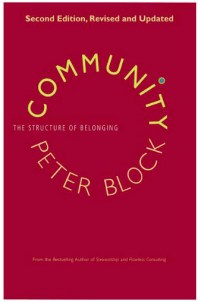
communityPeterBlockAnother connection, that appeared in my email box that day, was from Axiom News. It describes the work of Peter Block and the second edition of his book Community: The Structure of Belonging 
“whatever it is that you care about, it takes a group of people to learn to trust each other and choose to cooperate for a larger purpose to make the difference that you seek.”

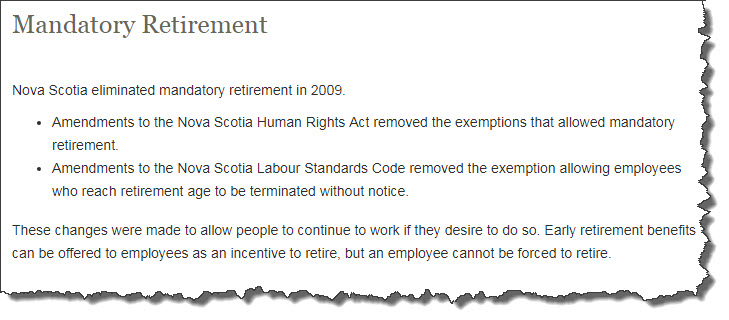
Hence my blog title is a play on words. Rather than think about Nova Scotia Works, let us imagine a social enterprise called Nova Scotia Retires. What would it look like? What issues would it address? Could it address the issues covered by Sandra Martin? Would it be designed along the lines suggested by Peter Block?

From various statistics, it would appear that Nova Scotia has a wealth of talent to support such an agency. It could be a world leader. Rather than addressing these questions, after the fact, we could create a culture that understands at a deep level, the transition from work to retirement. What activities, infrastructure are needed in support of this natural progression? Some of these structures exist today. Others may not exist anywhere. We need to experiment with different arrangements to see what can or will work in the future. That’s pretty exciting stuff. It could change our relationship to each other, as well as our relationship with our community and the landscape.

mandatoryRetirement
Excerpt from:  https://novascotia.ca/lae/employmentrights/mandatoryretirement.asp


Thanks to Natasha Prosser and Edward Wedler for their continued support.

References
Sandra Martin. 2018. The New Old Age. The Walrus  September. p.46-53

Peter Block 2018. Community: the Structure of Belonging. 2nd edition.

Axiom News.August 2nd 2018. Engaging Wisdom Councils and Uniting for Common Good.

Posted in New thinking

Task-oriented thinking in a timeless world

retirementIn our working world, we become used to responding to a variety of tasks and deadlines. What happens in our retirement? We are still geared to tasks and specific timelines. Imagine a situation where two individuals who have structured their lives according to tasks, and deadlines. Suddenly, in retirement, we need to change our behaviour and recognize that living in a rural society, the timelines are driven more by natural cycles.  The green beans and the gooseberries need to be picked. The beans have to be blanched, before freezing. The gooseberries turned into jam.

One of the artefacts of task-oriented employment is impatience. There are always additional tasks that arise. We are in a perpetual cycle of motion or uncertainty.

Within the institutional world, we develop an understanding of timelines; the pattern of activity over the year.daedlines In the teaching environment, we understand semesters, final examinations, Summer vacation. In the research environment, there is fieldwork, analysis, writing reports and going to conferences. There is also the structure of the research grant: proposals, the research and the deliverables.

Step forward into the future. Imagine, this structure no longer exists. The structure now relates to lives: births, marriages, separations and deaths.

timLeducAlong with retirement comes the role of ‘elder’. What have we learned from our career? Can we mentor the next generation to address environmental issues? Or the relationship between ‘Man and Nature’? What processes exist so that this knowledge can be applied to current issues in society? How can we change our educational institutions? How can we change our governing institutions?
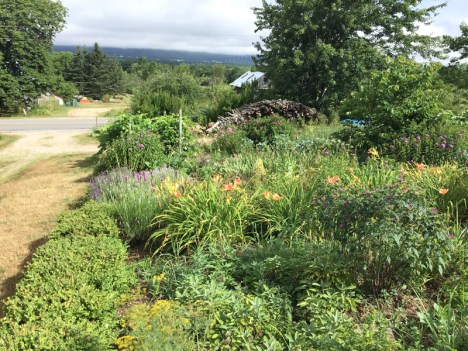
So often, we hear negative comments about the provincial demographics. Too many retirement-age people. Too many Nova Scotians living a lifestyle of residence in Nova Scotia but working elsewhere in Canada. What will happen when these task-oriented Nova Scotians return home to retire?

Can we envisage a different model? Where those returning to Nova Scotia bring back skills, expertise and understanding that can be applied to future issues in the province?

For example, in my own field ‘Geographic Sciences’ what is the value of knowledge of other geographies? Can we compare and contrast approaches to rural economic development, both within the province, but also across Canada, and at a global level?

The transition from task-oriented thinking (in a working world) to a timeless world (retirement) is universal. Is Nova Scotia, better or less prepared than other jurisdictions? – provinces, countries. Can we position ourselves, ahead of the curve?

Thanks for Edward Wedler for the graphics and Heather Stewart for the inspiration.

Posted in Creative writing

A Sense of Well-Being

Summertime is a time for family. IMG_0713

Every couple of years, we bring everyone together from Vancouver, Iqaluit and Ontario; this year for a few days at Pictou Lodge. It is a time to shake up the ‘old routine’.

Here are a few examples.

There is the opportunity to share newly discovered places in the region: to enjoy the excellent seafood chowder and lobster rolls at the cafe in Hillsburn; or an excuse to go to the End of the Line pub to watch World Cup soccer, or to check out the new British fare at the Paradise Cafe on the weekend. Or to walk up the road to Lunn’s Mill for the beer, but stay for the food.

With children and grandchildren, we have to revisit the concept of the ‘electronic cottage’. Internet service is poor in rural Nova Scotia. Not that simple. “How come Grandad’s iPad cannot access Netflix but more recent devices can. Well, he bought it in 2011.” The solution: buy a new iPad with the latest operating system. Oh yes, and if you want to use the flat screen TV, why not purchase Google Chromecast. Of course, the biggest challenges are all the passwords for the Apple store, Google, Netflix etc.

For the ‘wanna-be’ farmer, it is wonderful to access the youthful confidence on the tractor. We can go down and bush-hog the lower field, move the rocks from the field boundary up to the side of the pond or lift the pallet of earthworm casts to the orchard. It still leaves me with a mowed cord-wood road to bring out next year’s Winter wood supply.

We watched, as there was a need to ‘mouse-proof’ the barn. Now we need new gutters for the barn. Let’s put gutters on the garage too. We can capture the rainwater for watering the garden.

It brings into your life, the task-driven urgency experienced in our cities every day. Yesterday, we were able to get a car window repaired in Middleton, pick up water-testing bottles at the hospital in Windsor, go to the Apple Store at Halifax Shopping Centre, and still have time to drop into the Source in Bridgetown for the Chromecast purchase.

Altogether, this has set me up for today’s blog. That is without mention of the dry soil, unpredictable rainfall, weeding, or need to pick green beans, peas and gooseberries.

Final message. Don’t be fooled into thinking that the arrival of the Internet is the panacea to all of our rural economic issues. The Internet is simply part of the Infrastructure. In addition, you need access to other devices; you need access to applications that are relevant to your lifestyle, and you need connections with others who have knowledge and solutions from other places. And you must be able to embrace ‘change’. That all together, can lead to ‘a sense of well-being’

In advance, I want to thank Edward Wedler, Heather Stewart and family for their encouragement, creativity and continued support.

Posted in Article Review, Event Review

Encouraging Signs

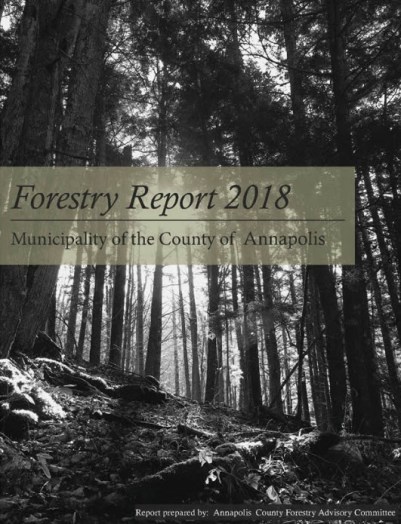
This week, I received a copy of the Forestry Report 2018 Municipality of Annapolis County. 11Jul18 8-07-16 AMIt was forwarded  to me by Gregory Heming, Chair, Forestry Advisory Committee. It is a summary of their initial research and makes a set of recommendations to council. The primary recommendation is to adopt the ‘Climate Forest’ paradigm.

‘It will lay out the ecological and economic case for curtailing all clear cutting on crown land within the county’.

‘It will summarize the current ecological diversity and overall health of all forested land in the county’.

Collaborators will include Annapolis County, Medway Community Forest Coop, Local Mill operators, DNR, private land owners, Mi’kmaq, Western Woodlot Services Coop, Forest industry.

11Jul18 8-11-57 AM


A second email, forwarded to me by John Wightman, is a notice of a Forestry Research Tour on July 13. This is a collaboration between the Medway Community Forestry Coop and DNR. Unfortunately, prior family commitments will not permit me to attend the event.


After reviewing the Municipal Forestry report, my response to Gregory Heming was that the Municipality of Annapolis County should ensure that they have current maps of ALL the landscape components. If the claim is ‘to make decisions on the best scientific evidence, then we need maps which are maintained to show changes in land use: forestry, agriculture,fisheries. This ‘geographic information’ should be available online to all citizens of Annapolis County. This would assist the County in its planning, and ensure accountability to the residents. Other candidate spatial layers would be hydrology, soils, geology, climate. This would support our efforts at sustainability in a changing climate e.g.late frosts, high Summer temperatures, changing storm tracks.

Our efforts should be regional in scope, from a holistic landscape perspective, deploying the expertise and technology readily available in the county (e.g. COGS and AGRG at NSCC Annapolis Valley campus).

References

Forestry Report 2018. Municipality of the County of Annapolis. Prepared by Annapolis County Forestry Advisory Committee.

Forestry Research Tour. July 13. at MTRI Kempt 6-8 pm. Collaboration between Medway Community Forest Coop and DNR.

Posted in Video Review

Reconciling with the Land

celticColours2018GuideLast weekend in Cape Breton, we picked up a copy of the Celtic Colours 2018 Festival Guide. The festival runs from October 5-13th. Their banner message is;

our culture lives – not in a country or a landscape – but in the fingers, the voice, the feet, and the heart“.

The guide includes an excellent map showing the official events, the learning opportunities, outdoor events, participatory events, farmers’ markets, visual art/heritage crafts, community meals and local food products.

Returning home, I recalled receiving the June newsletter from the Bras d’Or Lake Biosphere Reserve Association. It includes the links to two videos. The first, by Stan and Tom Johnson, Reconciling the Land and Each Other.

And a second, presented at the annual Canadian Biosphere Reserve Association meeting this Summer on Indigenous Circle.

This takes Heather and I back to the submission of the nomination document for the Southwest Nova Biosphere Reserve (SNBR) to UNESCO, Man and Biosphere (MAB) program, in 2001. The nomination for Bras d’Or Lake Biosphere Reserve (BLBR) was in 2011.

In 2018, we have a very different political context.  What is the relationship with the Mi’kmaq in Southwest Nova Scotia? The biosphere reserve includes the counties: Annapolis, Digby, Yarmouth, Shelburne and Queens. The core area is Kejimkujik National Park and the Tobeatic Wilderness Area. Do we see the same reconciliation with the land and each other, in SNBR, as found in BLBR? Do they produce a monthly newsletter?

With regard to the Celtic Colours message, are we in agreement, that we can separate our culture from the landscape?

Acknowledgements

To Edward Wedler and Heather Stewart for their continued support.

References

2018 Celtic Colours Festival Guide. Website celtic-colours.com

Bras d’Or Lake Biosphere Highlights newsletter. Vol.2 Number 5. June 26, 2018

Bras d’Or Lake Biosphere website www.blbra.ca

Southwest Nova Biosphere website swnovabiosphere.ca