Posted in Opinion

Landfullness: a framework for Annapolis Valley land use survey

Aldo Leopold in his Round River essays notes:

” The problem, then is how to bring about a striving for harmony with land among a people many of whom have forgotten there is any such thing as land, among whom education and culture have become almost synonymous with landlessness .”

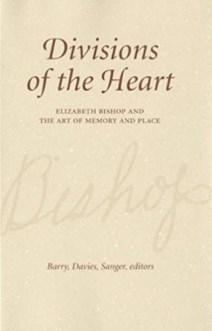
nature_2This quotation comes from a paper by Molly Ames Baker, found in a collection edited by Bob Henderson and Nils Vikander, Nature First: Outdoor Life the Friluftsliv Way.

 The twenty-five essays look at Friluftsliv in Norway, Canada and internationally.

My interest in the book is what can we learn about our relationship to the land by making comparisons with other, Scandinavian cultures.

rediscovery NABaker also quotes from Barry Lopez, The Rediscovery of North America.

“We have a way of life that ostracizes the land. As the suburbanization of America evolves at an ever-increasing rate, landscapes are becoming homogenized and we often find ourselves in ‘Anywhere USA'”

Baker is interested in Landlessness in Adventure Education, and therefore, conversely, develops a Landfull Framework. This framework has four levels:

a) Being deeply aware

b) Interpreting Land History

c) Sensing Place in the Present

d) Connecting to Home

Her concluding remarks are:

“The pull of modernity has existed for centuries and will continue to disconnect us from the land with greater force and diligence in the future. Striving to actively engage students with place, is a sure step towards creating connection to landscapes and a more sustainable future.” p.256

This blog is a follow up to ‘Do landscapes have memories?”

If we agreed on the need to better understand landscape change in the Annapolis Valley. And thus, the desirability to conduct a comprehensive land use survey. adventureBased_1Let us imagine we wanted to organize a team (or teams) of students to undertake the survey. Should the project be designed within a landfullness framework? Molly Ames Baker describes a framework for adventure-based programming: promoting reconnection to the land. Could the same philosophy be applied to the land use survey ?

References

Bob Henderson and Nils Vikander (eds.) 2007. Nature First. Outdoor Life the Friluftsliv Way.Natural Heritage books, Toronto.

Molly Ames Baker. 2007. Chapter 24. Landfullness in Adventure-based Programming: promoting reconnection to the land. p.246-256 in Henderson and Vikander.

Aldo Leopold.1966. A Sand County Almanac with essays on Conservation from Round River. Oxford University Press. p.210.

Barry Lopez. 1990. The Rediscovery of North America. University Press Kentucky. p.31.


Do landscapes have memories

Posted in New thinking

Do landscapes have memories ?

After visiting Roxbury a couple of weeks ago, it was time to re-read some of the local authors on the history of our forested landscape (e.g. Whitman, Parker). Reading their accounts of the importance of the forest industry to the economy, makes me realize: what we have lost, and yet, what we are holding onto. The same observations can be made about other resource sectors: agriculture, fishing, mining.

memoriesIt seems that these (human) memories of the landscape, and its utilization, get passed down from generation to generation.

If this is true, then my questions are:
1) by exploiting these ‘resources’, is there any attempt to put back into the land or sea, to reduce the level of degradation?

2) with these landscape changes, do we have a good idea of the rate of change? Are we conducting land use surveys? Do we fully understand the effects of extraction on the hydrology and water quality? Or on climate change?

How easy would it be to monitor these changes?

Today, there is considerable debate about the need for broadband in rural Nova Scotia. There seems to be little discussion on the type of information that can be shared on the network. Would a ‘community geographic information utility’ give us answers to the above questions? Could a broader context allow us to view the Annapolis Valley as a coherent physiographic region? Rather than as a collection of disconnected political fiefdoms.

The opportunity exists to better understand our landscape: today, in the past, and into the future. The technology is readily available. Expertise exists in various post-secondary institutions. If we know where we came from, we should be able to plan where we want to go and take action which offers the best transition for both land and sea.

We notice the changes in our forest cover. We notice the changes in our agricultural land. Is it perhaps time to a conduct a land use survey of the Annapolis Valley?

AnnapolisValleyPanoramio_Halifaxman
Creative Commons image of Annapolis Valley by Halifaxman with former Panoramio

I remember back in the ’60’s in England, Geography was defined by the work of Dudley Stamp and Alice Coleman. If you go online, you will see that Stamp conducted the first land use survey of Britain, started in 1933 and completed in 1948, after the Second World War. This was repeated later in 1960 by Alice Coleman. Would it not be amazing to conduct a 2020 land use survey of the Valley? In reviewing the groundbreaking work by Stamp in the UK, we see that he marshalled teams of teachers, schoolchildren to conduct the fieldwork.

9780773528161As a footnote, and an example of the type of individual research that can be undertaken to better understand our rich landscape, check out the book by Sherman Bleakney, Sods, soils and spades. The Acadians at Grand Pre and their dykeland legacy.

Acknowledgements

This week, I have had useful conversations on this broad topic with both Rachel Brighton and Ed Symons. Edward Wedler added the graphics. The above represents my own personal opinion.

References

J. Sherman Bleakney. 2004. Sods, Soils and Spades. McGill-Queen’s University Press.

Mike Parker. 2010. Buried in the Woods. Sawmill Ghost Towns of Nova Scotia. Potters field Press. East Lawrencetown, Nova Scotia

Dave Whitman. 2005. Lost in the Woods. The Lure and History of Roxbury. Bailey Chase Books. Paradise, Nova Scotia.


Posted in Event Review

A Place in Space

After the Canadian Cartographic Conference (CCA), it was time return to questions of forestry practices in Nova Scotia. With small woodlots in both Cumberland and Annapolis County, we had the opportunity to attend both the North Nova Forest Owners Co-operative (NNFOC) and the Western Woodlot Services Co-operative (WWSC) Annual General Meetings (AGM). NNFOC has been running for forty two years. The WWSC has been in operation for a year. Greg Watson, Manager NNFOC presented at both AGMs. In Wentworth at the NNFOC AGM, Sandy Hyde and Adrian Martynkiw were able to show the increase and distribution in the number of managed woodlots over the last four decades. Today, NNFOC has two hundred and eight six members and manages 69,600 acres, primarily in Cumberland and Colchester counties. Adrian has entered all the woodlots into a GIS database. This allows presentations of different treatments over time, as well as the capacity to co-ordinate operations on a geographic basis.

The WWSC has one hundred members and manages 27,675 acres in the seven county region: Lunenburg, Queens, Shelburne, Yarmouth, Digby, Annapolis and Kings. One of the topics which arose at both AGMs was the need for technically trained forest technicians with current GIS skills. To my mind, this offers a challenge to the NSCC, whether at the Annapolis or Lunenburg campus. If the co-operatives have digital maps of the individual management plans for each member, the next stage is to share the digital files so that woodlot owners can provide updates and input into these plans.

At the WWSC meeting in Cornwallis Park, Harold Alexander gave a presentation on his visit to Finland, and also the use of low grade wood for heating public buildings. This included a delegation to PEI.

The forest co-operative model of woodlot owners contrasts sharply with the current provincial policies, especially with regards the cutting on crown land. Of course, we will have to wait to see the contents of the Lahey report, expected later this Summer.

image of child with hat that reads "Never Stop Exploring"
Never Stop Exploring

My blog title ‘A Place in Space’ comes from a book by Gary Snyder. After a week of politics, it helps to reflect on his bioregional philosophy. Or as the Seattle Times quotes on the back cover:

A Place in Space, like a visit to an old forest, offers a refreshingly clear perspective on our relationship to the natural community – and the larger human community as well “.

This can be combined with re-exploring the local landscape. Monday, we cycled from the Station Road in Lawrencetown along the old CN Railway tracks (not the Harvest Moon trail) to Bridgetown. As the photograph shows “Never stop exploring”.

References

Gary Snyder. 19995. A Place in Space. Ethics, Aesthetics and Watersheds. Counterpoint. Washington, DC.

North Nova Forestry Owners Co-operative

Western Woodlot Services Co-operative

North Nova Forest Owners Co-operative contact Sandy Hyde or Greg Watson.

Western Woodlot Services Co-operative contact Patricia Amero.

Acknowledgements.

Debby Hebb and Heather Stewart shared the ride along the abandoned railway between Lawrencetown and Bridgetown.

Footnote. Check this week’s Brain Pickings at brainpickings.org

It includes a Soundcloud interview with Michael McCarthy on his book The Moth Snowstorm: Nature and Joy.

Posted in Event Review

From Space to Place in Three Days

The 43rd Annual Canadian Cartographic Association (CCA) conference was held at the Centre of Geographic Sciences (COGS) in Lawrencetown, Nova Scotia from May 30-June 1st. The flow of the conference can be characterized by the three keynotes.

Day 1. Ken Field. Esri, Redlands, California.  Fake maps ! The Cartography of Elections.

Day 2. Mike Goodchild. Seattle, Washington. Place, Maps, GIS.

Day 3. Marcel Morin, Grand-Pré, Nova Scotia. GIS, Adobe and Creative Cartographic Design.

The first day included technical workshops by Esri on ArcGIS Pro/ArcGIS Maps for Adobe Creative Cloud. Before the breakout sessions, Ken Field presented a talk on the cartographic representation of election results, with primary reference to the latest US election. The day concluded with a lobster dinner at Port George and a bonfire on the beach along the Bay of Fundy shore. This offered a moment of nostalgia, harking back to the CCA GIS Summer Institute in 1987. (Photo below: @DaveAtCOGS)

Mike Goodchild delivered the keynote on the next day. He drew a comparison between a place-centric view and a space-centric view, using the language of GIS to illustrate the difference. In the automated space-centric view the attention is given to positional accuracy on the earth’s surface and the concept of map layers. In the place-centric view, the focus is more upon the human context within the landscape. Further presentations on Day 2, emphasized the Inuit view of landscape (Claudio Aporta), as well the blurring of the line between art and cartography (Philip Bailey). During the final session, Ian Spooner discussed the work of Ian Brookes and the life of Robert Bell, in relation to place names in Northern Canada.

Marcel Morin kicked off Day 3 with a presentation on his work with First Nations groups across Canada. This was complemented by presentations by Thomas Herbreteau (Wolastoqey Nation, NB) and Tim Bernard and Gerald Gloade (Mainland Mi’kmaq, NS) on their place name digital atlas. The field trip on Saturday, hosted by Marcel Morin, was to the Grand Pre area, looking at the impact of the Acadian and New England Planters on the landscape. (Grand-Pre map on stretched canvas by Marcel Morin & photo of work by @kennethfield)

Over the three days, we were challenged by a number of new concepts. What do we mean by ‘place hierarchy ?’ What is implied by ‘informality’ and empty space in Nairobi, Kenya. Is the same true of the forests on South Mountain, Annapolis County ? Or Goodchild’s talk of the ‘robot car’ ?

The venue of the CCA conference in Lawrencetown allowed a group of Canadian cartographers to see the Walter Morrison Historic Map Collection, to view the art of Philip Bailey, the cartography of Marcel Morin and Jim Todd, as well as Dave Raymond’s collection of historic hydrographic charts of the Bay of Fundy.

From COGS, we had in attendance, several generations of Cartography instructors: Paul Illsley, David Raymond, Piers Churchill, Martha Bostwick, Monica Lloyd, John Wightman, Ada Cheung and John Belbin. Together, they have managed to keep the mapping torch aflame.

One memorable moment on the Thursday evening, at the Temple on Queen, was the induction of Michael Goodchild into the Order of CANMAP by John Wightman. Showing that Canadians, in collaboration with our neighbours and First Nations have been able to share our knowledge and experience of the landscape, using modern technology.

It is my expectation that the next time the CCA brings its annual conference to Lawrencetown, we will be talking about ‘place-based’ technology rather than ‘space-based’ technology. We shall not be talking about ’empty spaces’ but rather our immersion within the landscape.

I will close with a couple of afterthoughts. At the time of the conference, I was reading Claude Bissel’s book on Ernest Buckler. The following quotation about Buckler struck me as relevant.

” For his work (and peace of mind) he needed isolation and a particular place….. And the place for him was the house in Centrelea.”

We all have our particular place or a series of places over a lifetime. The CCA conference confirmed that Lawrencetown is a special place for many Cartographers and Geographers.

During the field trip to the Grand-Pré, I learned that Ian Spooner and Gerald Gloade had collaborated on bringing together western landscape science and Mi’kmac stories. This led me to check my copy of the book by Trudy Sable and Bernie Francis The Language of this Land, Mi’kma’ki. Phillip Bailey in his art had developed ‘merged maps’. This set me thinking about combining different versions of the same landscape e.g. Micmac, Acadien, Black Loyalists in Nova Scotia. Or take, Nicholas Crane ‘s book The Making of the British Landscape, and imagine the richness of a similar book ‘The Making of the Canadian Landscape’. (Merged Maps below by Phillip Bailey – CartographeMe).

References

Claude Bissell. 1989. Ernest Buckler Remembered. University of Toronto Press.

Trudy Sable and Bernie Francis.2012.The Language of this Land, Mi’kma’ki. CBU Press.

Nicholas Crane. 2016.  The Making of the British Landscape. From the Ice Age to the Present. Wiedenfeld and Nicolson.

Acknowledgements

Thanks to Monica Lloyd, Michael Goodchild and Marcel Morin for their specific contributions, and to sponsors: John Wightman, CANMAP and Eric Melanson, Esri Canada.

Thanks to all presenters and to Dave MacLean for photographs and conference details, go to link to presentations


Posted in New thinking

Is there a new Cartography ?

Given the forthcoming CCA conference, it is a good time to ask whether there is a ‘new Cartography’. When I posed the question to Michael Goodchild, one of the keynote speakers, he emailed back with the following response.

“I think there are several answers – technical (Web, Animation, 3D etc), data (new data sources, Big Data), theme (things that have never been mapped before, a critical focus)”

terrorismmexicanEarthquakeswindSpeedIf we look at the presentation schedule, there is much supportive evidence: 3D, LiDAR, Community Mapping, Indigenous Mapping, an artistic approach to place-making.

Within the social media world today, are there new expectations for Cartography? Can we envisage easier access to cartographic products? Quick maps, which combine the output from drones or other positional technologies, can be overlaid on accessible imagery.

If we think of the world of Twitter, Facebook, LinkedIn, does that influence our Cartography?

There seems to be a demand for online digital atlases representing different views of the landscape in Nova Scotia — e.g. Acadien, Mi’kma’ki or the UN Biosphere Reserve.

I have been trying to understand the value or purpose of a blog. Where does it fit, in terms of traditional forms of writing? Is there a graphic (cartographic) equivalent?

This takes us back to Goodchild’s talk ‘Place, Space, Geographic Science (and technology).

Regardless of the technology, the data or the theme, there is likely a consensus on the need for good cartographic design.

Looks like an interesting few days next week. Edward Wedler contributed the graphic.

Reference
M.F.Goodchild. Email dated May 23, 2018.


Posted in Book Review

The Story of COGS

As a contribution to the Canadian Cartographic Association (CCA) annual meeting at COGS, May 29-June 1st, 2018,  Ted McKinnon has produced a Flash version and a downloadable PDF version of The Story of COGS: a Nova Scotian Experiment in Technical Education. COGSThe original was written by Bob Maher and Heather Stewart in 2013. Ted was also responsible for adding the graphics and making a book-like product.

This type of collaboration has been a fundamental COGS value from the early ’80s. With the design of the Scientific Computer Programming program, we had to combine the application of the technology with the ability to customize the technology through programming. At the outset, the original team was Bob Maher and Bruce Peveril. Subsequently, we brought on board a number of our graduates: Patricia Castel, Bill Power, Kate Bate, David Colville, Roger Mosher, Marlin Gould. The applications evolved to include GIS and Image Analysis. We formed strong relations with industry leaders: ESRI and DIPIX.

Jump forward to 2018. We have a more complex technology suite. We are working on different devices: desktops, laptops, iPads, mobile phones. We are using software on the web to access information and to communicate with each other.

For myself, to produce a blog, whether for the GoGeomatics or Ernest Blair site, I need to collaborate with others who bring their complementary technical skills to the table. For example, the ability to find and add graphics, or to include maps on a website, all require technical expertise.

In our work, we need to combine the stories of geography, with the language of maps and technology. This remains the teaching challenge at COGS and other similar institutions.

This blog is dedicated to Bill Power who passed away last weekend. Bill had an excellent technical, engineering mind and a commitment to the teaching of the next generation of programmers.

I also want to acknowledge the contributions of Heather Stewart, Edward Wedler and Ted McKinnon.

Posted in Event Review

Background story to the COGS and CCA relationship

I was an instructor at NSLSI from 1980-1988. Later, I returned to the NSCC as Senior Research Scientist at AGRG from 1999-2011. This blog explains some of the background behind the creation of COGS and its relationship to the CCA. For more details on the history of COGS go to thestoryofCOGS.castoryOfCOGS

In 1980, the Nova Scotia Land Survey Institute (NSLSI) was providing practical training in surveying, photogrammetry and cartography. My arrival coincided with a new program to teach Scientific Computer Programming. John Wightman had recognized the need for the new technology. We acquired a PRIME  mini-computer system. The intensive 48-week program emphasized the application of computer software. As a Geographer with a background in Biogeography and Computer Mapping, I was keen to find software that would run on PRIME. After a short search, I discovered Esri. We initially installed PIOS and GRID; later we were an early adopter of Arc/ Info.

In 1986, with input from Roger Tomlinson, Ray Boyle and others, the decision was made to change the name of NSLSI to the College of Geographic Sciences. By this time, we were offering an advanced diploma in GIS. As Esri Canada was selling new systems, they would come to COGS to recruit trained technical staff.

In 1987, there was a demand to offer a GIS Summer Institute. We matched up graduating students from the GIS program with new Geography university faculty interested in teaching the technology. CCA supported the Summer Institute. We brought in Tomlinson and Goodchild from Ontario. This was before  Michael headed to UCSB as part of the NSF funded National Center for Geographic Information and Analysis (NCGIA).

Attendees included Peter Keller, Brent Hall, Norm Drummond, Stephen Reader, Chris Gold, Simeon Roberts, Roger Wheate and others. It was a success and repeated a second time. Now over thirty years later, COGS and CCA are working together again. COGS is now the Centre of Geographic Sciences, as part of the NSCC.

Returning this year will be Michael Goodchild, Bob Maher, John Wightman, Roger Wheate plus faculty and ex-faculty from COGS, Dave Raymond, Mike Donnelly,  David Colville and Roger Mosher.
Plus a number of Esri employees.

We all look forward to John’s lobster boil on the Bay of Fundy.

Posted in Event Review, New thinking

Glimpse of a new economy

Saturday night, we were treated to Nature Night at Sugar Moon Farm. sugarMoonNights
Supper was pancakes, sausage, beans, blueberries and maple syrup. Sugar Moon Farm is an excellent example of value-added forestry products. For dessert, we had four talks related to private woodlot management. The audience was about forty persons. The introduction was provided by Matt Miller, followed by his father, Tom, President, The Friends of Redtail Society; Dale Prest from Community Forests International and then Greg Watson, North Nova Forest Owners Co-op.

The Friends of Redtail Society offered the following philosophical position ‘ The Land: from Commodity to Community’,  based on the Aldo Leopold quotation:

“We abuse land because we regard it as a commodity belonging to us. When we see land as a community to which we belong, we may begin to use it with love and respect”

Dale Prest described the concept of climate forests as a new paradigm for rural economies, where the forest is managed to capture and store additional carbon. Outside Sussex, New Brunswick, Community Forests International manages 705 acres. It provides a model for the purchase of carbon offsets. They have a two-pronged approach: privately-owned climate forests and community-owned climate forests. Recently, they have established a for-profit Climate Forest company.

Greg Watson explained the history of North Nova Forest Owners Co-op. Today they have 286 members and manage 69,600 acres. Greg used GIS to illustrate the distribution of these clients over time across Northern Nova Scotia. He also showed the application of new GPS and GIS technology by the contractors who are undertaking ecosystem-based management. The co-op manages the relationship between the local contractors and the woodlot owners.

It was a very positive evening. It showed how the next generation of forest managers are working with woodlot owners in the Maritimes. This offered a stark contrast to the current litany of media reports on clearcutting of crown lands in Nova Scotia.

Last Thursday afternoon, we visited Dick Groot’s photographic exhibition at the Cedar Centre in Windsor. it is entitled Closure: a photographer’s eye on an old economyclosureDickGrootThe four closures were Windsor Wear, Fundy Gypsum Company, Britex and Minas Basin Paperboard Mill. The last closure is also described in a separate book, We wanted it to last forever. It includes both photographs and interviews with former employees at the mill.weWantedItToLastForever

In the Closure Epilogue, Dick is optimistic about the new economy.

” Here in Nova Scotia, we have seen significant growth in the wine producing industry where supporting research is being introduced in several universities and colleges. We also have the College of Geographic Science in Middleton, a truly world-class institution that can support a vast range of environmental and infrastructural enterprises and governments”.

( Indeed, the College of Geographic Sciences, now the Centre of Geographic Sciences, is in Lawrencetown. Middleton is the site of the Applied Geomatics Research Group and the Environmental and Agricultural Technologies Lab)

“Therefore I am optimistic for re-building the economy in a more sustainable, diversified manner than we have done in the past, based on a merging of existing competencies with a new digital world.”

My interpretation of these two events is as follows. There is an optimistic vision, following Friends of Redtail Society, based on community rather than a commodity. It can be applied to the land and the sea. It respects the changing climate. There are ways to combine ‘boots on the ground’ with ‘eyes in the sky’ to convert ‘problems’ into ‘opportunities’. This was well-illustrated by the talks from a single sector, Forestry, at Nature Night in Earltown. We also know that small-scale manufacturing in rural communities will not last forever, especially if they are dependent on external investments and the fluctuations in the global economy.

Afterthoughts.

I am concerned about the concept of ‘carbon offsets’. This seems to be yet another reductionistic idea. Reducing the complex forested landscape to carbon; carbon then becomes the commodity. This warrants more thought and a deeper understanding.

References

Sugar Moon Farm. https://www.sugarmoon.ca

Friends of Redtail Society www.friendsofredtail.ca (Tom Miller)

Community Forests International forestsinternational.org (Dale Prest)

North Nova Forest Owners Co-op Ltd. www.northnovaforestry.com (Greg Watson)

Dick Groot. 2018. Closure. A photographer’s Eye on an Old Economy. Gaspereau Press.

Dick Groot. 2015. We wanted it to last forever. South of the River Publishing.

Posted in Creative writing, Event Review

The Five Little Pigs

Do you remember the children’s’ nursery rhyme ‘ The Five Little Pigs’? Counted out on the toes or fingers of the child.

“This little pig went to market. This little pig stayed home. This little pig had roast beef. This little pig had none. This little pig went wee-wee all the way home.’ Here are my five little pigs.5pigs

  1. new drone video from Neil Green of forest cutting above the Inglisville road. You can compare it with the video shot in January.
  2. This Saturday evening there is Nature Night at Sugar Moon Farm. It includes talks by Dale Prest, Community Forests International, Greg Watson from North Nova Forestry Co-operative (NNFC) and Tom Miller, Friends of Red Tail. The event is designed to engage Nova Scotia’s small private woodlot owners in the fight against climate change. We are members of the NNFC and will attend.
  3. David MacLean at COGS sent me a link to the work of Scott Morehouse at Esri on ArcHUB. This is of interest for two reasons. ArcHUB is an industry-driven approach to the Community Information Utility concept. At the end of the article, there is a link to a video where Scott describes his early beginnings in GIS. This time frame coincides with the history of COGS.
  4. Yesterday I bumped into Wayne Regier. Wayne worked with me at AGRG.  He explained that there is now the EAT lab at NSCC, Middleton. EAT is Environmental and Agricultural Technologies.  There is the likelihood that the climate network established by David Colville will be extended across the province. This makes tremendous sense in the light of climate change. Secondly, the Lab is using drone and soil sensor networks to monitor the condition of vineyards in the province. Both excellent, supportable initiatives.
  5. Finally, I have now finished Nicholas Crane ‘s book The Making of the British Landscape. I have been lugging this tome around for the last month or so. It covers the last ten thousand years. In the last chapter, Crane talks about the changes in the British urban landscape over the last hundred years, post the industrial revolution and post the second world war. It reminded me how much land use is impacted by our industrial economy. This linked, in my mind, to Closure, Dick Groot’s photographic exhibit in Windsor on the demise of manufacturing in Nova Scotia. I plan to see his exhibit this Friday at the Cedar Centre in Windsor.

These are my ‘five little pigs’. I shall be able to report back on #2 and #5 next week. I have started to read Simon Winchester’s book. Unfortunately, the style is rather pedantic; however, I shall persevere, because I am interested in the field work necessary to produce that first Geology map of the United Kingdom. I think that I now understand why I could go to two second-hand bookstores and find the same book!

Not exactly sure, what the symbolism might be about those five pigs.

REFERENCES

Neil Green video link https://youtu.be/_X78Ei38_Wo

Nature Night at Sugar Moon Farm https://www.sugarmoon.ca

Link to ArcHUB http://www.esri.com/esri-news/arcwatch/0418/back-to-basics

Nicholas Crane. 2016. The Making of the British Landscape. From the Ice Age to the Present. Weidenfeld and Nicholson. Chapter 22 Interland 1920-2016.

Simon Winchester. 2001. The Map that changed the World. William Smith and the birth of Modern Geology. Harper Collins.

Posted in Book Review, Event Review

Merging: hopes and fears

We have been back for a week. It has been a difficult time. When you move from one landscape to another, there seems to be a different rhythm in terms of how space and time are structured. northSouthFirst, we are back to the organic orchard: time to burn the prunings and brush; time to complete the paperwork for certification. Second, there are meetings related to community mapping, and the forthcoming Canadian Cartographic Association (CCA) symposium at COGS. The ‘to do’ list becomes overwhelming.

This week, I had the chance to hear Ed Symons talk about the accomplishments of the collaboration between COGS and the Age Advantage Association aka MapAnnapolis. The meeting was in Wolfville and thus there was talk about MapValley.

bookCover_mergingThe next evening, I went to Melvern Square to hear Soren Bondrup-Nielsen. He was presenting a CARP-sponsored (Clean Annapolis River Project) talk on “Riparian areas: natural filters and critical habitat in agricultural landscapes”. Luckily, I was able to purchase a copy of Soren’s beautiful book published by Gaspereau PressMerging: Contemplations on Farming and Ecology from Horseback. It inspired my blog title.

Friday evening at the End of the Line pub, meeting with friends, I was able to catch up on Tim Webster’s presentation “Sea level rise, Geomatics and Climate”. Bill MacDonald was at the talk, and apparently, mentioned the concept of a barrage at the Digby Gut.

On Friday, Andrea Vandenboer emailed me about the drone footage in my earlier blog (January 21, 2018). She was producing a video for the Centre for Local Prosperity. Via a recent interview with Tim Habinski, Warden, Annapolis County, she had become aware of the drone footage. I was able to connect her with Neil Green, the drone videographer.

Yesterday, it was time for a break. After a short visit to Annapolis Royal farmers market, and a coffee meeting with friends, to discuss the concept of the St. Mary’s Bay Community Centre: (the concept is to repurpose the school as a social enterprise), we headed off to Wolfville and Windsor.

I wanted to go back to The Odd Book in Wolfville where the week before I had noted an interesting book on the first geology map for the United Kingdom. I wanted to go to Windsor to see Dick Groot’s photographic exhibition. This is how things unfolded.

We dropped into The Odd Book but the book had been sold. It was Simon Winchester’s The Map that changed the world. We continued on to Windsor to the Cedar Centre, only to find that it is closed on the weekend. This was turning out to be ‘a dud’.

As we drove around Windsor, we noticed a large number of cars at the Schoolhouse Brewery. We also noted a second-hand bookstore on Gerrish Street. We stopped in, and I found a copy of Winchester’s book. Things were looking up!

Why my interest in this book?

It describes the life of William Smith. In Winchester’s words:

‘He noticed that the rocks he was excavating were arranged in layers, more important he could see quite clearly that the fossils found in one layer were very different from those found in another. And out of that realization came an epiphany: that by following the fossils, one could trace layers of rock as they dipped and rose and fell – clear across England, and, indeed clear across the world. Determined to publish his profoundly important discovery, by a creating a map that would display the hidden underside of England, he spent twenty years traveling the length and breadth of the kingdom by stagecoach and on foot, studying rock outcrops and fossils, piecing together the image of this unseen universe.’

Now transfer the concept to the Annapolis Valley, in the words of Bondrup-Nielsen p.73:

“The fissure that started separating North America and Africa, which ran up the Bay of Fundy, ceased for some reason and another fissure started further to the east, leaving what is now Nova Scotia, attached to North America.

When geologists examine the rock types in southern parts of Nova Scotia they find distinct similarities with the rock types of Morocco in North Africa. The rock types in Cape Breton are similar to rock types in Scotland. These massive geological events are continually shaping the world although at a slow pace. The land we interact with is not static; it is continually changing”.

My interest is the importance of the geology to our understanding of the Valley environment, as a fundamental layer in a community geographic information utility.

windsorMakersAt the second-hand bookstore, we noticed the Grand Opening of Makersa non-profit, social enterprise where the community can make, learn, teach, tinker, gather, collaborate, share, innovate, socialize, build, create, buy or sell’.

After a quick stop at the Schoolhouse Brewery for a small flight of local craft beers, we visited Makers. There, I bumped into Michael Caplan and his family. As part of Refresh Annapolis Valley, they are offering two programs: Creative Computing for kids, aged 8-12 and Exploring Computer Science for teenagers. For example, with the younger group, May 8, Animating Stories – interactive stories from Scratch. For the teenager, June 16, Teaching a Computer to see. Explore AI by learning how to build a program that can guess what it sees in a picture.

SUMMARY
Whether it is St Mary’s Bay or Windsor, there are grassroots, non-profit, social enterprises which are leading the change, across the generations. These are the hopes. The fears are the bureaucratic infrastructure that may distract us from these initiatives. Candidates for concern would be the expert opinion, tidal barrages, certification processes.

Or in the words of Bondrup-Nielsen, page 212:

“The perception is that the current game, the quantity game, is the only game in town, but that is not the case. If we think instead in terms of our quality of life, as measured by connections and the relationships we have with all life, the game will change. Nature operates as a system in balance – it is a dynamic, steady state. This philosophy needs to be the guiding principle of our human economy.”

Thanks again to Edward Wedler for his contribution to the graphics. Thanks too to the friends and family who unknowingly act as a source of inspiration.

REFERENCES
Ed Symons. MapAnnapolis could turn into MapValley.  Talk sponsored by Wolfville and Area Historical Society. April 25, 2018.

Soren Bondrup-Nielsen. 2014. Merging. Contemplations on Farming and Ecology from Horseback. Gaspereau Press.

St Mary’s Bay Community Centre. The Weymouth Events Newsletter. April 17,2018.

Simon Winchester. 2001. The Map that Changed the World. William Smith and the birth of Modern Geology. Harper and Collins.

Makers. go to website www.makerswindsor.com

Creative Computing and Hoist Annapolis Valley. go to website http://www.refreshannapolisvalley.org

Trailer for Climate Change and the Human Prospect: http://centreforlocalprosperity.ca/thinkers-lodge-retreat-outcomes/