We have been back for a week. It has been a difficult time. When you move from one landscape to another, there seems to be a different rhythm in terms of how space and time are structured. 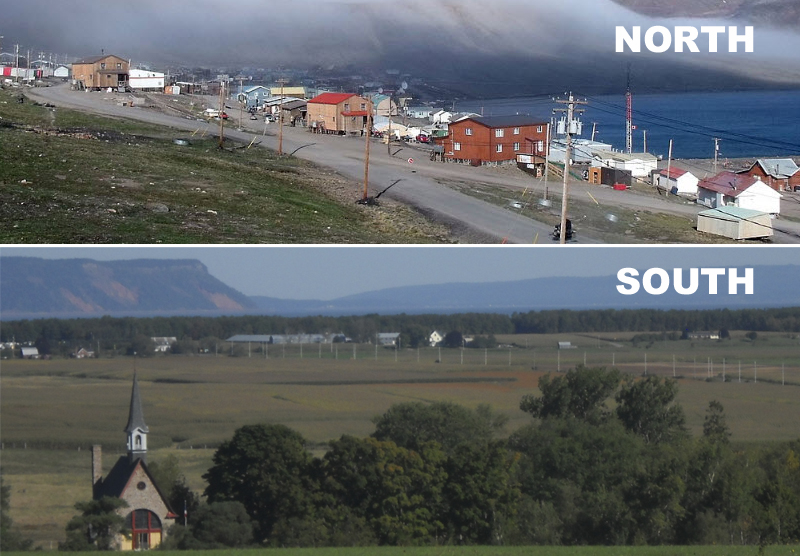 First, we are back to the organic orchard: time to burn the prunings and brush; time to complete the paperwork for certification. Second, there are meetings related to community mapping, and the forthcoming Canadian Cartographic Association (CCA) symposium at COGS. The ‘to do’ list becomes overwhelming.
This week, I had the chance to hear Ed Symons talk about the accomplishments of the collaboration between COGS and the Age Advantage Association aka MapAnnapolis. The meeting was in Wolfville and thus there was talk about MapValley.
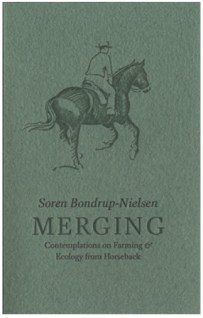 The next evening, I went to Melvern Square to hear Soren Bondrup-Nielsen. He was presenting a CARP-sponsored (Clean Annapolis River Project) talk on “Riparian areas: natural filters and critical habitat in agricultural landscapes”. Luckily, I was able to purchase a copy of Soren’s beautiful book published by Gaspereau Press, Merging: Contemplations on Farming and Ecology from Horseback. It inspired my blog title.
Friday evening at the End of the Line pub, meeting with friends, I was able to catch up on Tim Webster’s presentation “Sea level rise, Geomatics and Climate”. Bill MacDonald was at the talk, and apparently, mentioned the concept of a barrage at the Digby Gut.
On Friday, Andrea Vandenboer emailed me about the drone footage in my earlier blog (January 21, 2018). She was producing a video for the Centre for Local Prosperity. Via a recent interview with Tim Habinski, Warden, Annapolis County, she had become aware of the drone footage. I was able to connect her with Neil Green, the drone videographer.
Yesterday, it was time for a break. After a short visit to Annapolis Royal farmers market, and a coffee meeting with friends, to discuss the concept of the St. Mary’s Bay Community Centre: (the concept is to repurpose the school as a social enterprise), we headed off to Wolfville and Windsor.
I wanted to go back to The Odd Book in Wolfville where the week before I had noted an interesting book on the first geology map for the United Kingdom. I wanted to go to Windsor to see Dick Groot’s photographic exhibition. This is how things unfolded.
We dropped into The Odd Book but the book had been sold. It was Simon Winchester’s The Map that changed the world. We continued on to Windsor to the Cedar Centre, only to find that it is closed on the weekend. This was turning out to be ‘a dud’.
As we drove around Windsor, we noticed a large number of cars at the Schoolhouse Brewery. We also noted a second-hand bookstore on Gerrish Street. We stopped in, and I found a copy of Winchester’s book. Things were looking up!
Why my interest in this book?
It describes the life of William Smith. In Winchester’s words:
‘He noticed that the rocks he was excavating were arranged in layers, more important he could see quite clearly that the fossils found in one layer were very different from those found in another. And out of that realization came an epiphany: that by following the fossils, one could trace layers of rock as they dipped and rose and fell – clear across England, and, indeed clear across the world. Determined to publish his profoundly important discovery, by a creating a map that would display the hidden underside of England, he spent twenty years traveling the length and breadth of the kingdom by stagecoach and on foot, studying rock outcrops and fossils, piecing together the image of this unseen universe.’
Now transfer the concept to the Annapolis Valley, in the words of Bondrup-Nielsen p.73:
“The fissure that started separating North America and Africa, which ran up the Bay of Fundy, ceased for some reason and another fissure started further to the east, leaving what is now Nova Scotia, attached to North America.
When geologists examine the rock types in southern parts of Nova Scotia they find distinct similarities with the rock types of Morocco in North Africa. The rock types in Cape Breton are similar to rock types in Scotland. These massive geological events are continually shaping the world although at a slow pace. The land we interact with is not static; it is continually changing”.
My interest is the importance of the geology to our understanding of the Valley environment, as a fundamental layer in a community geographic information utility.
 At the second-hand bookstore, we noticed the Grand Opening of Makers ‘a non-profit, social enterprise where the community can make, learn, teach, tinker, gather, collaborate, share, innovate, socialize, build, create, buy or sell’.
After a quick stop at the Schoolhouse Brewery for a small flight of local craft beers, we visited Makers. There, I bumped into Michael Caplan and his family. As part of Refresh Annapolis Valley, they are offering two programs: Creative Computing for kids, aged 8-12 and Exploring Computer Science for teenagers. For example, with the younger group, May 8, Animating Stories – interactive stories from Scratch. For the teenager, June 16, Teaching a Computer to see. Explore AI by learning how to build a program that can guess what it sees in a picture.
SUMMARY
Whether it is St Mary’s Bay or Windsor, there are grassroots, non-profit, social enterprises which are leading the change, across the generations. These are the hopes. The fears are the bureaucratic infrastructure that may distract us from these initiatives. Candidates for concern would be the expert opinion, tidal barrages, certification processes.
Or in the words of Bondrup-Nielsen, page 212:
“The perception is that the current game, the quantity game, is the only game in town, but that is not the case. If we think instead in terms of our quality of life, as measured by connections and the relationships we have with all life, the game will change. Nature operates as a system in balance – it is a dynamic, steady state. This philosophy needs to be the guiding principle of our human economy.”
Thanks again to Edward Wedler for his contribution to the graphics. Thanks too to the friends and family who unknowingly act as a source of inspiration.
REFERENCES
Ed Symons. MapAnnapolis could turn into MapValley. Talk sponsored by Wolfville and Area Historical Society. April 25, 2018.
Soren Bondrup-Nielsen. 2014. Merging. Contemplations on Farming and Ecology from Horseback. Gaspereau Press.
St Mary’s Bay Community Centre. The Weymouth Events Newsletter. April 17,2018.
Simon Winchester. 2001. The Map that Changed the World. William Smith and the birth of Modern Geology. Harper and Collins.
Makers. go to website www.makerswindsor.com
Creative Computing and Hoist Annapolis Valley. go to website http://www.refreshannapolisvalley.org
Trailer for Climate Change and the Human Prospect: http://centreforlocalprosperity.ca/thinkers-lodge-retreat-outcomes/
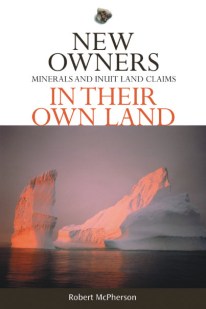 On the flight to Ottawa, I picked up a copy of the Nunatsiaq News (April 13 edition). There was an interesting opinion piece by Alex Buchan, Vice-President, NWT and Nunavut Chamber of Mines. He reviewed a book by Robert McPherson New Owners in their own land, Minerals and the Inuit Land Claim. “McPherson was a geologist hired by the Inuit Land Claim organization to identify mineral-rich lands that we would eventually select .”
 So, I checked his website
  While in Wolfville, I could not resist stopping at the second-hand bookstore. There, I found a book by Edmund Gilbert British Pioneers in Geography. This set of essays describes the Oxford School of Geography, going back to the twelfth century. A couple of quotations:
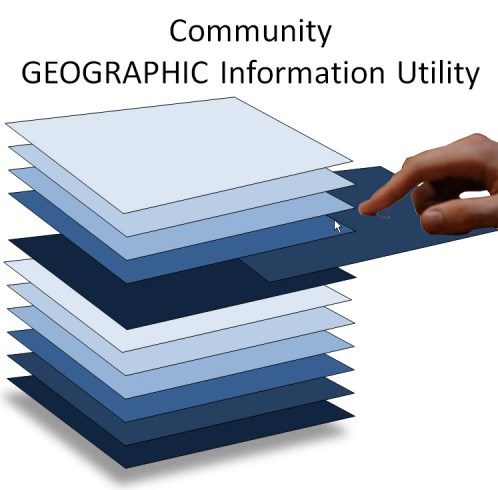 The concept of a ‘community information utility’ (CIU) is very generic and subject to various interpretations. I suggest we add the descriptor ‘GEOGRAPHIC’ to avoid confusion with other utilities — like electricity, water, etc. — thus, CGIU.
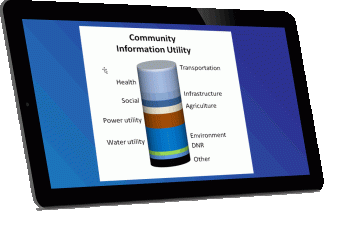 Around 2011, I was working at AGRG on Community Mapping. We had discovered the work of Paul Beach in Sault Ste Marie. He had developed the Community Information Utility (CIU) concept and implemented it in his region. The idea was to give citizens access to digital geographic information about their community. We brought Paul to Halifax and Lawrencetown. He met with Ian Thompson (Deputy Minister, and later with the Chronicle Herald). AGRG hired Ron L’Esperance’s company to see if the concept could work in Southwest Nova.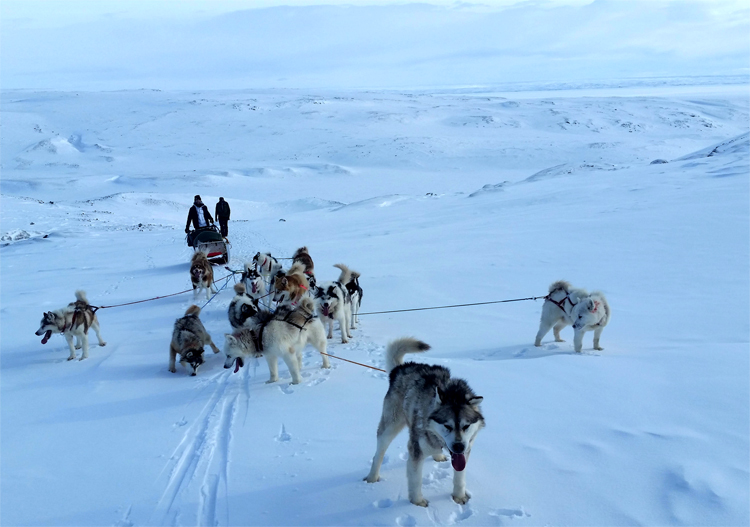


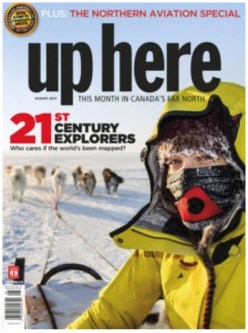 The August 2015 issue had an article by Tim Edwards (p 42-50) entitled ‘From the West to the Wilderness‘.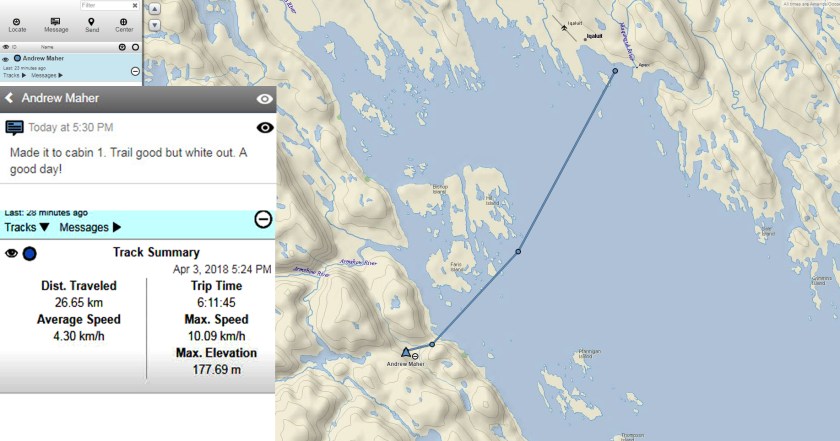
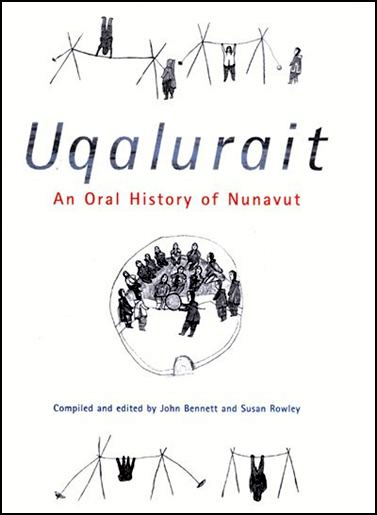 ” During a blizzard, the snowfall is usually soft. A type of snow mound, uluangnaq, is formed. The (prevailing wind) then erodes the mound, thereby forming an uqaluruq – a drift with a tip that resembles a tongue (uqaq) – this is pointed and elevated from the ground – Uqalurait are formed by the uangnaq , (west- northwest wind)” p xxv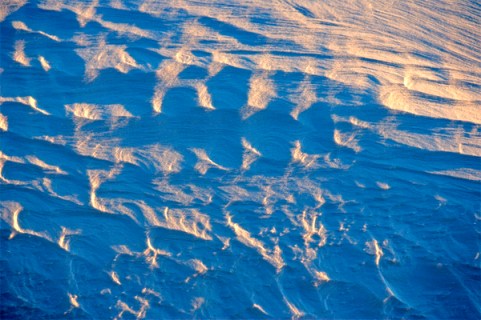
 Ernest Blair Experiment